
Authorized Official · PSO P0268
Dr. Gurpreet Singh Padda, MD, MBA, MHP
Authorized Official, CareGuard (PSO P0268).
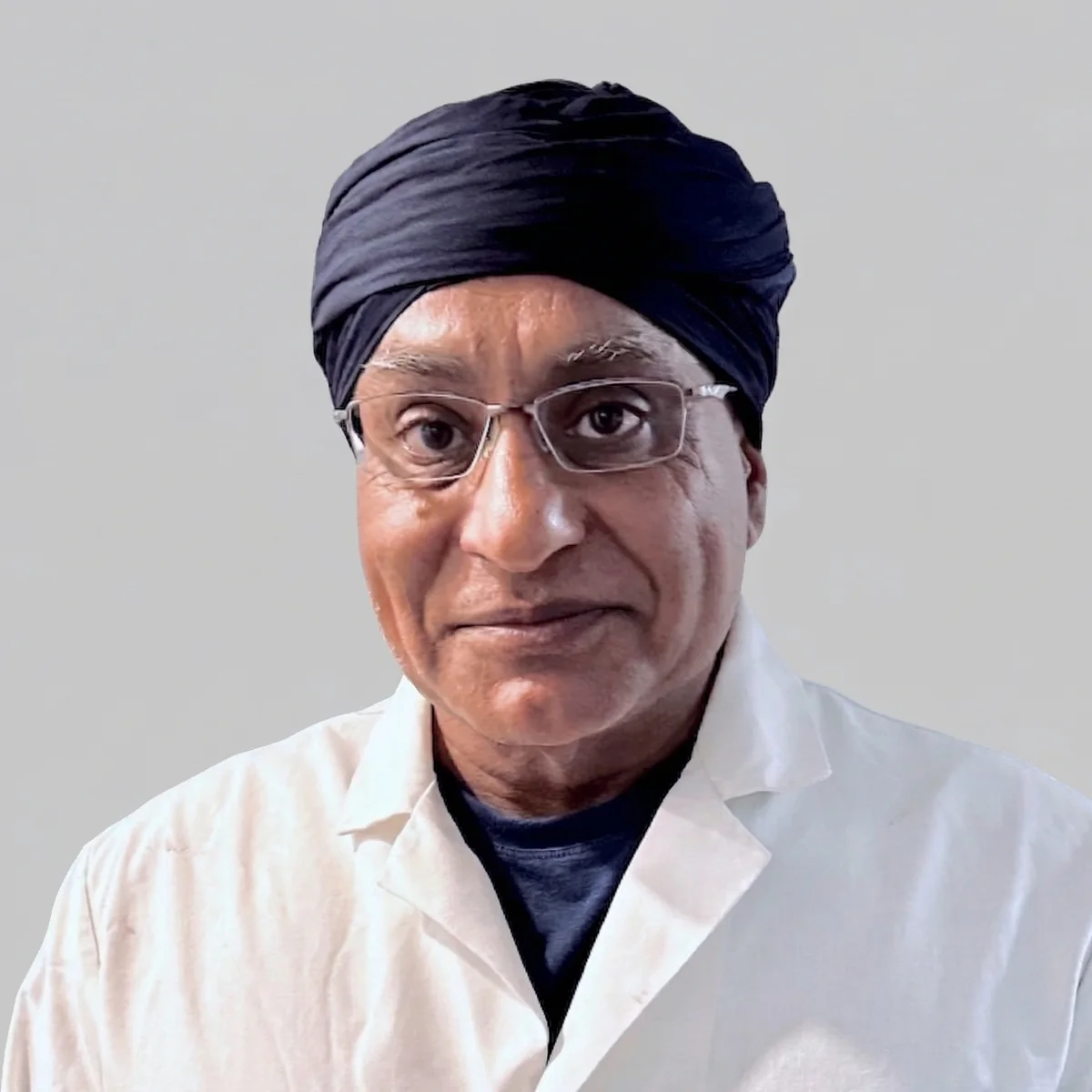
Dr. Padda is the Authorized Official of CareGuard — the role the Patient Safety Act assigns to the person responsible for certifying a Patient Safety Organization’s compliance to AHRQ — and the point of contact on the federal listing for PSO P0268.
He is a physician in St. Louis with more than three decades in practice, board certified in anesthesiology, interventional pain, addiction medicine, obesity medicine and pain medicine. His National Provider Identifier is 1427035955.
He is not an operator of the facilities CareGuard reviews and holds no position in any of them.
What clinical positions does CareGuard work from?
CareGuard’s programs are not neutral about medication in long-term care, and it is worth saying whose clinical judgment they rest on.
- Deprescribing is critical in older adults, and it is a discipline with named tools — the AGS Beers Criteria, STOPP/START v3 (2023), STOPPFrail — rather than an improvisation. Deprescribing for health optimization.
- Overuse of antihypertensives is a major contributor to falls in older adults, through orthostatic hypotension, with the morbidity and mortality that follows a fracture or a head injury. Blood pressure medication and falls.
- Statin use is associated with new-onset type 2 diabetes, which is on the FDA label and is a trade-off to weigh rather than a reason to stop. Statins and new-onset diabetes.
- Restraints, chemical or physical, are a failure of care planning rather than a clinical tool. Restraint-free care.
Why does CareGuard exist?
In his own words, on why CareGuard exists: there is a tremendous disconnect between a local site manager and the facility ownership or the administrative ownership that may be off site — and the reporting channel is designed to move what is seen in the building to the people who can act on it, quickly, before a problem gets out of control. The visibility gap.
Elsewhere
What is Dr. Padda board certified in?
Dr. Padda holds five board certifications and the professional affiliations below. CareGuard does not issue credentials of any kind; these are his.




Published research. His peer-reviewed record is registered under ORCID 0009-0001-0166-3186 and indexed at PubMed, OpenAlex and Semantic Scholar. His biographical record is Wikidata Q141049117.
Find Dr. Padda Online


In the press
- Dr. Gurpreet Singh Padda, MD: Diabetic Neuropathy Is Treated as One Nerve Problem; It Is Three Different Problems (EIN Presswire, November 14, 2026). A squeezed nerve and a nerve harmed by high blood sugar can cause the same foot symptoms, Dr. Padda notes for World Diabetes Day, and only testing shows which one decompression can correct.
- Dr. Gurpreet Singh Padda, MD on Veterans Day: The System Solved the Prescription and Did Not Solve the Pain (EIN Presswire, November 11, 2026). For Veterans Day, Dr. Padda reviews the stellate ganglion block for PTSD, an injection near the neck’s sympathetic nerves, and reports what one randomized trial in service members showed and what it left unproven.
- Dr. Gurpreet Singh Padda, MD: Trial Suggests PRP May Delay Knee Replacement for Patients Already on the Surgical List (EIN Presswire, October 12, 2026). Dr. Padda keeps his account of a World Arthritis Day knee trial inside what it measured, calling PRP a possible bridge for patients already listed for replacement and saying nothing about cartilage growing back.
- Dr. Gurpreet Singh Padda, MD Puts the New Low-Carb Guideline to Work in Pain Care: Medicines Change Before Pain Does (EIN Presswire, October 7, 2026). Medication safety sits at the center of this release, which warns that some pain medicines and antidepressants may lower sodium during the first weeks of cutting carbohydrate, so every dose change stays with a physician.
- Dr. Gurpreet Singh Padda, MD Publishes The Dopamine Brain: Dopamine Is Not the Pleasure Chemical We Thought (EIN Presswire, October 5, 2026). Sixty-one trials, The Dopamine Brain reports, found that low-dose dopamine in intensive care raised urine output while leaving dialysis and survival unchanged, showing that a measure can move while the outcome that matters stays put.
- Dr. Gurpreet Singh Padda, MD Publishes ‘The Angry Gut, Your First Brain’ (EIN Presswire, September 28, 2026). Printing the measured figure whenever it conflicts with the famous one is the rule behind The Angry Gut, which gives vagus nerve fiber counts from human tissue instead of a widely repeated 80 to 90 percent ratio.
- Dr. Gurpreet Singh Padda, MD: Half of Diabetic Nerve Damage Causes No Symptoms, and It Still Causes Falls (EIN Presswire, September 24, 2026). Getting up from a chair tells little about how likely a person with diabetes is to fall, according to Dr. Padda, since safety depends on regaining footing after a stumble almost instantly, which silent nerve damage and lost muscle power make harder.
- Dr. Gurpreet Singh Padda, MD Publishes The Pained Brain, Arguing Chronic Pain Is a Metabolic Disease the Scan Cannot See (EIN Presswire, September 21, 2026). How an imaging report is worded shapes what a patient asks for next, The Pained Brain observes, citing the Lancet’s 2018 series, which found that a specific cause could not be named in almost every case of low back pain.
- Dr. Gurpreet Singh Padda, MD Discusses Alzheimer’s Research, Not Just Plaque (EIN Presswire, September 21, 2026). Testing for what medicine can already measure is the case Dr. Padda makes on World Alzheimer’s Day, pointing to falling glucose uptake, insulin’s competition with amyloid for one clearing enzyme, and B vitamins in high-homocysteine patients.
- International Overdose Awareness Day (EIN Presswire, August 31, 2026). Alongside opioid weaning figures the practice gathered from its own patients, which are not trial outcomes, the release explains opioid-induced hyperalgesia, where escalating doses heighten pain sensitivity instead of easing it.
- New Book The Starved Brain by Dr. Gurpreet Padda Reframes Dementia as a Metabolic Disease of Overnutrition (EIN Presswire, July 23, 2026). Normal lab results may not be enough for the brain, Dr. Padda argues in his first book, pointing to B12 levels that sit low within the normal range and grading his four-pillar prevention framework by the strength of its evidence.
- FDA Advisory Committee Convenes on Peptides: Understanding What Reclassification Means (EIN Presswire, July 20, 2026). Lifting the FDA restriction on twelve peptides opened them to review without any affirmative safety finding, Dr. Padda explains, and he names patients who buy vials online as the group facing the most risk.
- Patients Already on the Knee Replacement Waiting List Find Platelet-Rich Plasma Outperformed Cortisone and NSAIDs (EIN Presswire, July 19, 2026). Over six months, the randomized knee trial tracked opioid use along with pain, function and blood markers tied to cartilage breakdown and inflammation, and Dr. Padda keeps his account to those results without promising new cartilage.
- Padda Institute Center for Interventional Pain Management Relocates to Expanded State-of-the-Art Facility (EIN Presswire, March 1, 2026). Procedures guided by imaging are done on an outpatient basis at the larger Woodson Road facility rather than in a hospital, part of a team-based model that brings coordinated pain, rehabilitation and metabolic care under one roof.
Frequently asked questions
Who is Dr. Gurpreet Singh Padda?
Dr. Gurpreet Singh Padda, MD, MBA, MHP is a St. Louis physician with more than three decades in practice. He is board certified in anesthesiology, interventional pain, addiction medicine, obesity medicine and pain medicine. He is the Authorized Official of CareGuard, the Patient Safety Organization listed by AHRQ as PSO P0268, and the point of contact on that federal listing.
What does the Authorized Official of a Patient Safety Organization do?
The Patient Safety Act gives the Authorized Official responsibility for certifying the organization’s compliance to AHRQ, the federal agency that lists Patient Safety Organizations. For CareGuard, PSO P0268, that person is Dr. Padda, and he is also the point of contact named on the federal listing. It is a compliance role, not a credential CareGuard hands out.
Does Dr. Padda own or run the facilities CareGuard reviews?
No. Dr. Padda is not an operator of any facility CareGuard reviews, and he holds no position in any of them. CareGuard reviews skilled nursing and assisted living facilities that other people own and run, and the reporting channel routes what people in the building see to that facility’s ownership and the attorneys ownership designates.
What is Dr. Padda’s position on medication in long-term care?
Medication burden in long-term care is usually higher than it needs to be. Deprescribing is critical in older adults and uses named tools: the AGS Beers Criteria, STOPP/START version 3 and STOPPFrail. Overuse of blood pressure medication is a major contributor to falls through orthostatic hypotension. Restraints, chemical or physical, are a failure of care planning, not a clinical tool.